
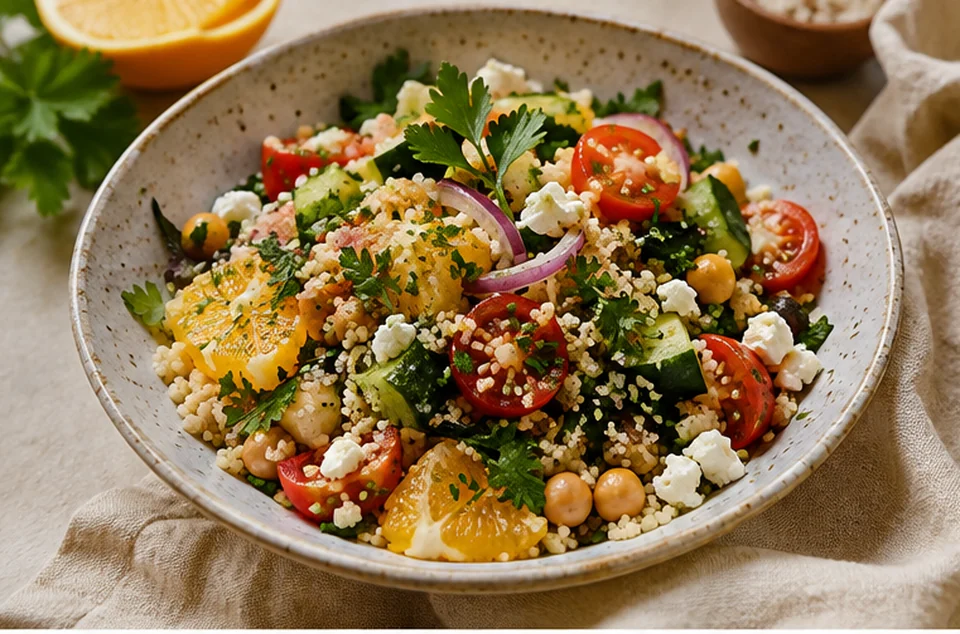
A packed lunch is easier when it feels like a meal rather than a responsibility. It should travel safely, taste good at the time you eat it and be realistic to put together before leaving home. That usually means a little thought about texture and temperature, not an elaborate meal-prep session.
Think about how it will be eaten
Will you have a fridge, a microwave, a table or only a short break? A couscous salad works well chilled; a bean skillet may need reheating; crisp wraps are easiest to eat by hand. Consider the actual conditions before cooking something that needs appliances you won't have.
An appealing lunch might include something soft, something crisp and a little dressing or sauce. The variety often matters more than whether it looks like a photograph.
Pack the wet parts separately
Tomatoes, cucumber, dressings and hummus can make bread damp after several hours. Keep sauces in a small leakproof container, pack crunchy toppings separately, and assemble if you have the time and space.
If everything must go in one container, choose ingredients that tolerate mixing, such as couscous with chickpeas and chopped vegetables.
Give temperature a proper plan
Foods requiring refrigeration should stay cold at 5°C or lower. A workplace fridge is ideal; otherwise use a suitable insulated lunch bag and ice packs and follow the food's handling directions. Do not leave potentially hazardous lunches on a warm desk or in a hot car.
If you cannot keep perishable food cold, consider a shelf-stable lunch option until you can refrigerate it safely.
Make enough, but not too much
A handful of dinner components can become a next-day lunch, provided they were cooled, stored and transported safely. Keep cooked rice and pasta to the shorter storage period recommended by NSW Food Authority. Never build a packed lunch around leftovers whose storage history is unclear.
You don't need a parade of separate containers. Two useful boxes—one for the meal, one for something crisp—may be enough.
Review after eating
If you were still hungry, disliked a soggy texture or found the lunch awkward to carry, change the next version. A good lunch routine is made through small adjustments, not through a single perfectly planned Sunday.
Make a note of combinations you genuinely like. They become a short list of reliable lunches to rotate rather than another project to maintain.
Good information, not personal advice
This article is general educational content, not dietary or medical advice tailored to you. For individual nutrition requirements, consult a suitably qualified professional such as an Accredited Practising Dietitian.