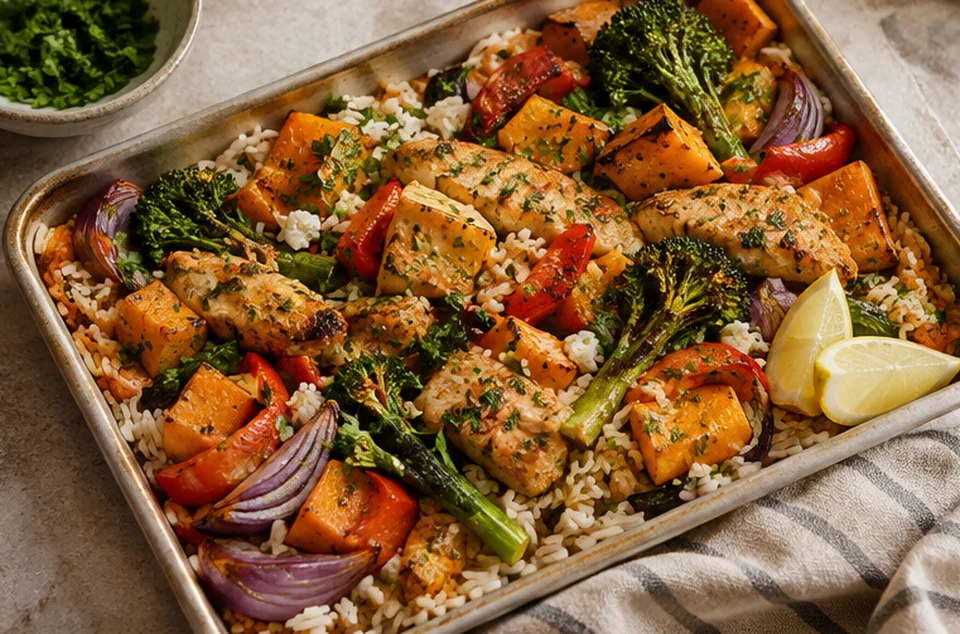
A traybake is useful because the oven does most of the work, but it rewards a little attention to timing. Starting the sweet potato first stops the chicken drying out while you wait for the vegetables. Lemon, oregano and garlic are familiar flavours that make the whole pan smell inviting without demanding a complex sauce.
Let's make it.
- Heat the oven to 210°C (190°C fan-forced). Line a large, shallow baking tray.
- Toss the sweet potato, capsicum and onion with half the olive oil and bake for 12 minutes to give them a head start.
- Meanwhile, mix the remaining oil with lemon zest, lemon juice, garlic and oregano. Coat the chicken with the mixture using a separate clean bowl.
- Add the chicken and broccoli to the tray, spreading everything in one layer. Do not crowd; use two trays if needed.
- Roast for about 20–25 minutes more, until vegetables are tender and the thickest part of every chicken piece reaches at least 75°C on a clean food thermometer.
- Cook the rice according to its packet and serve the hot traybake over it, with extra lemon if you like.
Make it your own.
- Keep raw chicken and its juices away from ready-to-eat foods and clean utensils.
- Thigh fillets vary in size; thermometer temperature, not a fixed cooking time, determines doneness.
- A second tray helps the vegetables roast instead of steam.
Storing and food safety
Refrigerate cooked leftovers promptly at 5°C or colder. Eat within 3 days; cooked rice within 2 days. Reheat thoroughly until steaming hot.
Times are estimates and equipment varies. Read labels for allergens, follow food-safety directions and make suitable substitutions for your needs. Recipes are editorial suggestions, not personalised nutrition advice.